
How to Solve Team, Sales, and Revenue Challenges With One Clear Business Framework?
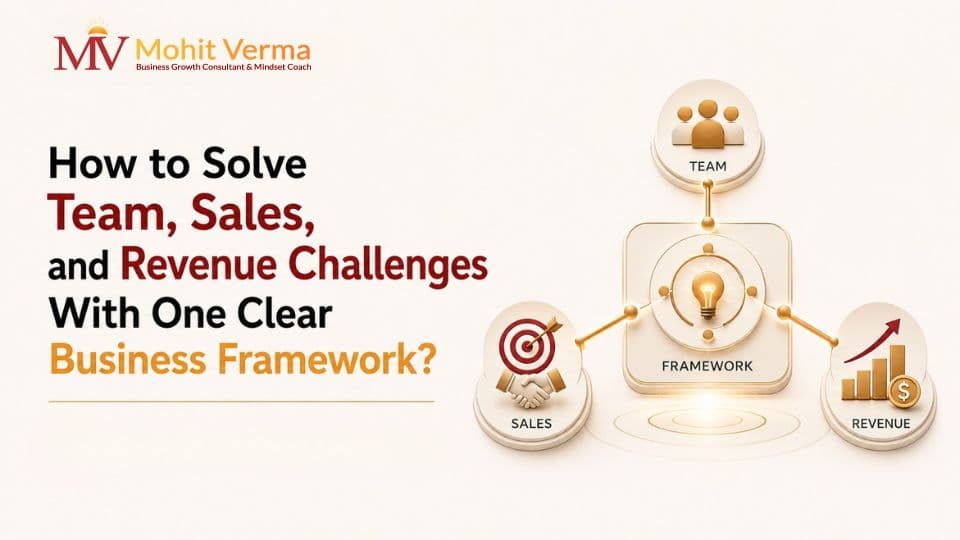
At some point, every business leader crosses an invisible barrier. You peep into your company and understand that things aren't as smooth as they have been. Your marketing department reports that we produce hundreds of qualified leads and all your sales department can tell is that no lead is ready to make a purchase. What is worse, your closing rates drop, forecasting becomes a guessing game, and team morale plummets to the bottom.
In the absence of revenue generation, it is tempting to assume that there are sales and personnel problems in your organization. Continue reading to learn how to grow a business using a unified framework that can solve those challenges and boost your next business stage of growth forever.
Why are Your Teams, Sales, and Profitability Not Aligned?
Each company works in silos. The marketing department concentrates exclusively on the initial stages of the process and focuses on the metrics like website clicks or social media activity. The sales team is fully preoccupied with monthly quotas. Leaders are obsessed with profit margins and cash flow. Lack of communication between these three entities creates serious problems in three key aspects:
1. Disconnection Between Departments
Companies work in silos. The marketing department only cares about website clicks; the sales team tries to reach their monthly quotas; leaders are concerned about their net profits. As they do not have common objectives, problems arise.
Marketing believes that they succeeded because people started downloading their free guide. The sales team expects buyers to be ready to purchase and have authority. This leads to money waste and loss of customers, proving why consulting a Business Growth Consultant in Gurgaon is so essential.
2. Deal Closing Issues Caused by Poor Sales Skills
Despite the regular inflow of potential customers, poor skills of the salespeople prevent them from closing deals and creating relationships. It results in long sales cycles, when a lot of time is spent contacting wrong people.
Lack of value-focused discussions causes conversion rates to fall. Expensive marketing efforts turn out useless due to the inability of sales representatives to discuss prices, which negatively impacts how to improve your money mindset within the team.
Check Out: Selling with Strategic Clarity: A Modern Approach to Closing High-Quality Deals Without Pressure!
3. Low Employee Motivation and Burnout
Sales is a stressful activity. Rejection, micromanagement, and digital surveillance put a strain on employees. If workers perceive themselves as replaceable components of your company rather than valuable team members, they quit. And then you start wasting money hiring and training new employees.
A 5-Phase Framework to Align People, Process, and Profit
In order to solve these challenges, you need a simple framework which would unify your mindsets, work processes and tools.
Phase 1: Communicate Common Goals and Link Your Data
First, link your tool stack. Connect your marketing channels to a single platform such as Odoo CRM, making sure everyone has access to the same data. Base a portion of your marketing department KPIs on real sales and not leads alone. Have weekly meetings where sales reps inform your marketing department about objections from your customers so marketing could adjust its message accordingly, using proven business growth strategies.
Phase 2: Standardize Your Deal Closing Processes
Closing deals is not something only a few salespeople can do. It is a process, which involves listening and empathy. Make sure your team follows certain proven techniques of closing deals, rather than making hard-sell pitches:
The Summary Close: Go through all of the agreed upon benefits in a summary.
The Alternative Close: Provide two options to make the buyer feel in control of the situation.
The Empathy Close: Address the buyer's business concerns directly, building your credibility.
The Question Close: Ask relevant questions so your buyer realizes the cost of doing nothing.
Phase 3: Provide Ongoing Training and Practice
One-time seminars won't change your employees' habits. People will forget everything you teach if there is no opportunity to practice. Implement continuous training on a simple platform that combines online courses with role-play simulations. Practicing difficult conversations in a secure environment prepares your reps to speak to actual prospects, reinforcing how to cultivate a winning mindset.
Phase 4: Address Sales Reps' Tech Resistance
Often, sales representatives reject new software since they feel micromanaged. Instead of making your salespeople think this way, make them see how useful the software is for them personally. Emphasize how the new tools minimize their repetitive tasks, schedule automated follow-ups, and save them valuable time. Have your top salespeople implement new software and close deals more efficiently. Everyone else will be following shortly after, showing how to fix founder dependency as systems take over.
Phase 5: Create a Supportive Culture
Having unified your processes and software, focus on supporting your team. Set realistic, measurable and clear goals. Reward everyone's wins publicly to raise their morale and provide bonuses along with other incentives, such as mentorship programs, wellness services, and career development opportunities. When people know how to reach the goal and are provided necessary support, the employee turnover decreases while profit growth becomes consistent, an essential aspect of business coaching for entrepreneurs.
Conclusion
Repairing broken workflows and increasing sales requires both strategy and cultural change. You can't solve the problems of our days with inflexible, old-school approaches to business management. Your business growth depends on the synchronization of your business processes with your well-trained and motivated team.
If you want to optimize your workflows, increase your profits and unleash the true potential of your business, you may want to contact a professional. Mohit Verma is a dedicated business growth consultant and mindset coach who helps businesses to create data-driven frameworks and high-performance cultures. Reach out to Mohit Verma and book a strategy session today!