
How to Create a Marketing Feedback System That Reveals What Actually Converts?
Many companies invest significant money in marketing, but still fail to understand the reasons behind the success or failure of particular campaigns. These businesses monitor clicks, impressions, traffic, etc., but all these metrics do not help them determine why someone decided to make a purchase. The gap that needs to be filled is customer feedback.
When using a proper marketing feedback system, businesses get to understand their customers' behavior, factors that influence their decision-making process, and improve their marketing efforts based on the insights gained from the feedback. Over time, this leads to better messaging, stronger customer relationships, and higher conversion rates. Keep reading to find out how to develop a marketing feedback system that will reveal the secrets of conversion and help your company grow!
What is a Marketing Feedback System?
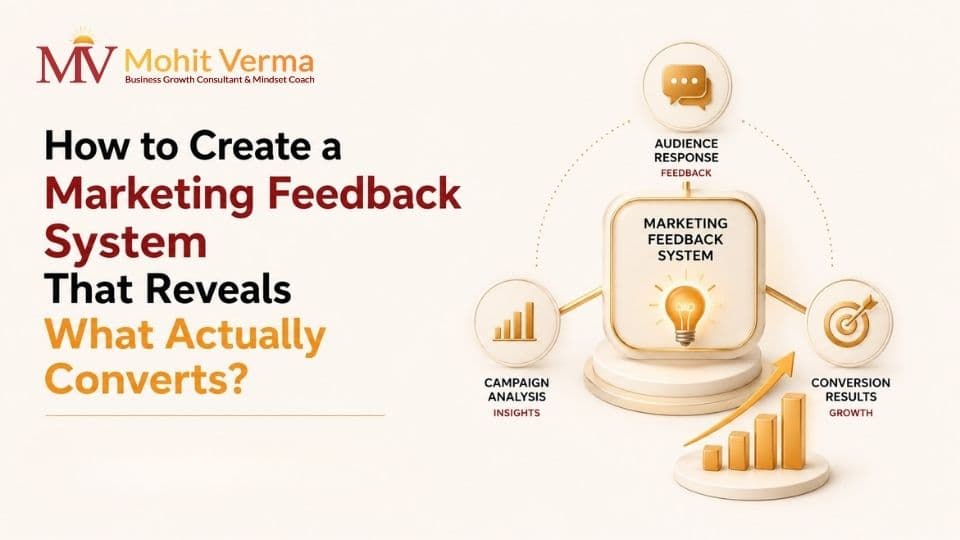
A marketing feedback system is a process that allows collecting, analyzing, and using customer insights during the whole customer journey. It includes not only customer feedback itself, but also website statistics and other behavioral data like e-mail activity, web browsing history, etc. The purpose of this system is to analyze not just customer opinions, but reasons that influenced their actions.
The marketing feedback system differs from one-time surveys by the fact that it operates constantly. Every campaign, customer interaction, and channel gives valuable data that needs to be used when making marketing decisions.
Why Your Company Needs This System?
Marketing strategy without any customer feedback is guesswork. Attractive campaigns can be launched, but if nothing is known about customer reaction, improvement will be impossible.
With a marketing feedback system, companies can:
Identify customer motivations to convert
Identify factors that negatively affect conversion rate
Improve customer experience in all communication channels
Make data-driven decisions in marketing
Increase customer satisfaction and loyalty
Improve the performance of marketing campaigns constantly
Instead of guessing, companies will use actual customer insights when developing marketing campaigns.
Steps to Develop a Marketing Feedback System that Drives Conversions
A marketing feedback system is based on constant improvement and learning. The following tips will help you collect meaningful information about your customers and their behavior, find out what influences their decisions, and how to turn customer feedback into an increased conversion rate.
1. Collect Feedback from Multiple Sources
Clients communicate with the company in different ways. Customer feedback should come from several sources, not just one survey. Use customer reviews, website feedback forms, e-mail surveys, live chat interactions, customer service communications, social media comments, and sales calls to gather information about your clients. Website analysis and visitor behavior data also show moments where visitors drop out of the process of buying.
2. Ask Questions That Uncover Buying Decisions
The value of feedback is contingent upon the value of your questions. Rather than asking open-ended questions like "did you enjoy our service?", ask questions that reveal customer behaviors.
For instance:
What prevented you from making the purchase?
Why did you choose us over other options?
Do you feel that something was missing?
How could we improve things prior to your next purchase?
Such questions reveal helpful information about improving future marketing campaigns.
3. Blend Customer Feedback with Marketing Metrics
While customers provide explanations, analytics reveal actions. Both sources are equally valuable. Compare customer feedback with important marketing metrics including click-through rate, bounce rate, performance of landing pages, shopping cart abandonment, and conversion rate.
For example, if people tend to leave your pricing page, and customer feedback suggests that there is something wrong with it, you have found the place to work. A combination of qualitative and quantitative sources results in better decisions.
4. Segment Your Feedback
Not all customers think alike. There are new visitors, returning customers, loyal customers, and first-time buyers.
Segmentation of customer feedback by customer profile, traffic source, device, geographical location, or purchase history reveals patterns that may remain unnoticed otherwise. This allows businesses to create personalized marketing strategies.
5. Take Actions Based on Your Insights
If you collect customer feedback, it won't bring any benefit unless you implement changes afterwards. Every repeating problem must be solved and lead to an improvement.
If customers consider your site hard to use, make some changes in design. If people don't open emails, try new subject lines. If your customers constantly ask certain questions prior to making the purchase, change your product pages or FAQ.
It's small changes consistently that make a huge impact on conversion rates.
6. Close the Loop
People feel that their opinions matter when they see the results. After implementing changes based on customer feedback, inform customers that it's their feedback that resulted in positive changes.
Respond to reviews, express gratitude for suggestions, announce updates, and follow up with the resolution of issues. Closing the loop builds customer relationships and encourages them to share more valuable feedback.
Measure What Actually Matters!
Any good marketing feedback system should result in improvements in business metrics. Track such performance indicators as:
Conversion rate
Customer satisfaction score (CSAT)
Net promoter score (NPS)
Customer retention rate
Customer lifetime value (CLV)
Bounce rate
Cart abandonment rate
Email click-through rate
Landing page conversion rate
Analyzing customer feedback along with these metrics helps businesses understand which changes really help.
Conclusion
Marketing feedback mechanisms help convert consumer perspectives into valuable business insight. As opposed to making assumptions, businesses get to learn firsthand from their target consumers, understand what impacts purchasing decisions, and enhance their marketing approaches.
If you want to build a marketing strategy that consistently delivers measurable results, expert guidance can help you move faster and avoid costly mistakes. Mohit Verma, a business growth consultant, helps businesses build data-driven marketing systems, improve customer acquisition strategies, and create sustainable growth through smarter marketing decisions that focus on what truly converts. Book a session today!